.svg)
.svg)

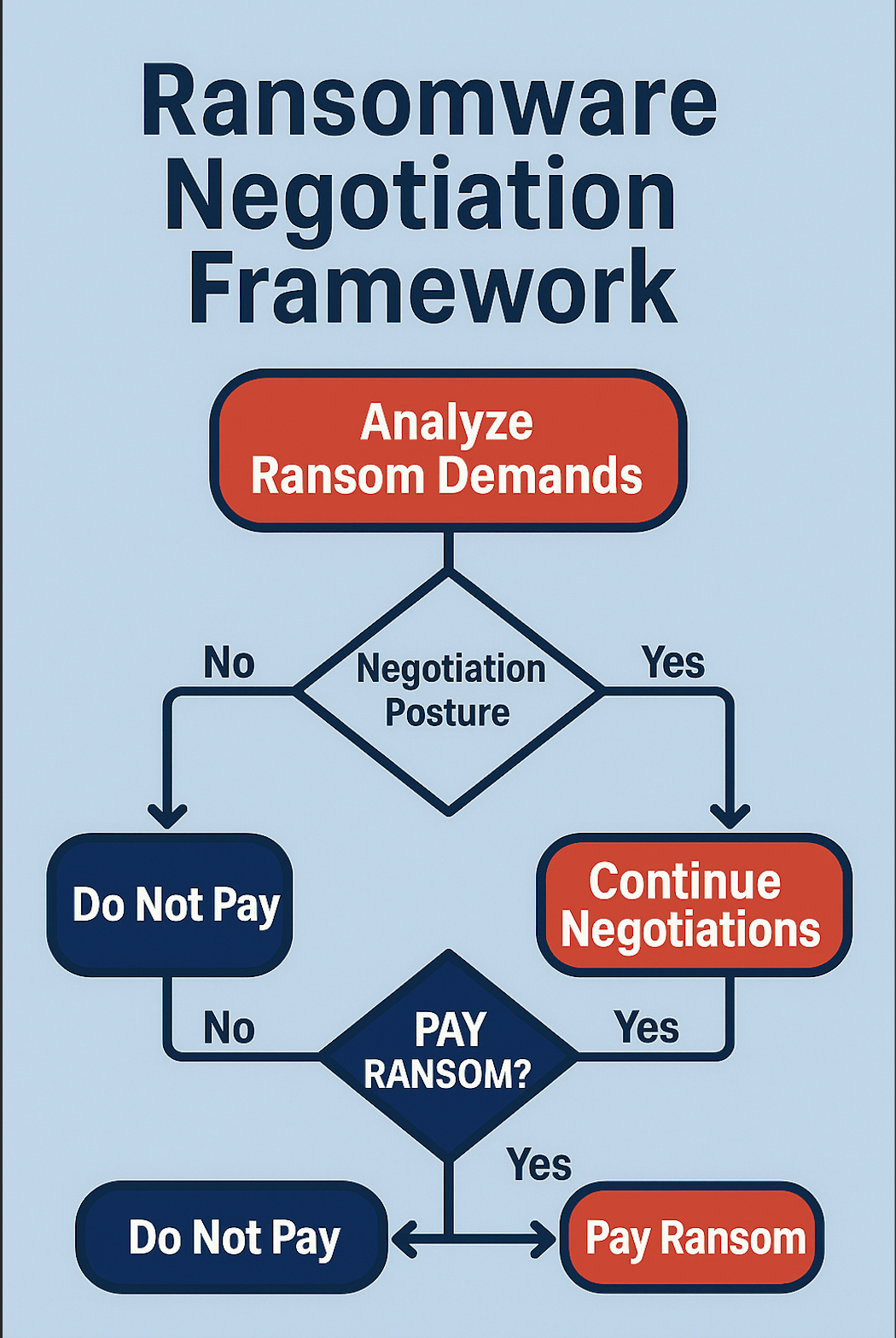
What Is a Ransomware Negotiation Framework?
A negotiation framework is a structured decision-making model used to evaluate ransom demands and guide communication with threat actors. It provides a consistent, defensible approach when pressure is at its highest.
A strong framework helps you:
- Define your posture (pay, stall, reject, delay)
- Align legal, technical, and ethical concerns
- Standardize decisions under pressure
- Reduce reliance on gut instinct or emotion
It’s not a script—it’s a blueprint for resilience.
Core Components of a Strong Framework
- Legal and Regulatory Filters
- Is the threat actor or wallet under OFAC or global sanctions?
- Are SAR (Suspicious Activity Report) filings required under FinCEN?
- Business Impact Assessment
- What is the cost of downtime or data exposure?
- Do we have working backups or recovery options?
- Stakeholder Alignment
- Are legal, executive, insurance, and comms teams on the same page?
- Who has final authority to authorize payment or rejection?
- Threat Actor Profiling
- What’s the group’s history and credibility?
- Do they honor decryption or deletion promises?
- Communication Strategy
- How will tone, timing, and messaging be managed?
- What escalation paths or stalling tactics are available?
Examples of Negotiation Postures
- Hardline (No Payment)
- ✅ Pros: Ethical stance, avoids financing crime
- ❌ Cons: Higher risk of data loss or leaks
- Strategic Delay
- ✅ Pros: Buys time for recovery or intel gathering
- ❌ Cons: Demands may escalate
- Conditional Payment
- ✅ Pros: Minimizes immediate impact, shows due diligence
- ❌ Cons: Risk of repeat targeting without tracking controls
Key Questions to Ask When Choosing a Framework
- Can it adapt to double extortion or AI-driven threats?
- Does it enable rapid cross-team coordination (legal, PR, IT)?
- Can it integrate with your incident response playbooks?
- Does it provide documentation for post-incident reporting and board review?
How AiiR Solves This Challenge
Traditional frameworks leave too much to chance. AiiR Response was built to automate and strengthen ransomware decision-making with:
- Automated OFAC & sanctions screening for compliance confidence
- Real-time business impact analysis to quantify downtime and exposure costs
- Stakeholder orchestration across legal, insurance, IT, and comms—inside one platform
- Threat actor intelligence modules to profile groups and predict negotiation outcomes
- AI-powered negotiation playbooks that manage tone, escalation, and timing consistently
With AiiR, your organization doesn’t just have a framework—it has an always-on digital ally that reduces risk, improves consistency, and documents every step for regulators, boards, and insurers.
Final Thoughts & Call to Action
There is no one-size-fits-all approach to ransomware negotiations. But without a structured framework, you risk making reactive, inconsistent, and legally vulnerable decisions.
The right move isn’t just choosing a framework—it’s operationalizing it at scale. That’s where AiiR comes in.
👉 Ready to take control of ransomware negotiations?
Book a demo with AiiR Response today and see how our AI-driven platform helps insurers, breach coaches, and enterprises respond with speed, consistency, and confidence.