.svg)
.svg)

Why Tabletop Exercises Matter
While technical controls and backups are critical, people and processes make or break a ransomware response. Tabletop exercises allow teams to:
- Clarify roles across legal, PR, IT, and executive teams
- Practice critical decision-making under pressure
- Refine communications protocols and notification workflows
- Build institutional memory for future crises
A well-run tabletop reduces confusion when minutes matter.
Core Elements of a Ransomware Tabletop Exercise
Cross-Functional Participation
Include representatives from:
- Security and IT
- Legal and compliance
- Communications and PR
- Executive leadership
- Risk and finance
Realistic Ransomware Scenarios
Avoid generic breach scenarios. Use:
- Ransom note with countdown
- Exfiltrated PII or IP
- Threat of leak site publication
- Demand for crypto payment to a foreign wallet
Phased Escalation
Introduce events over time, such as:
- News of leaked employee records
- Contact from the threat actor
- Pressure from board or customers
Injects and Decision Points
Make teams answer questions like:
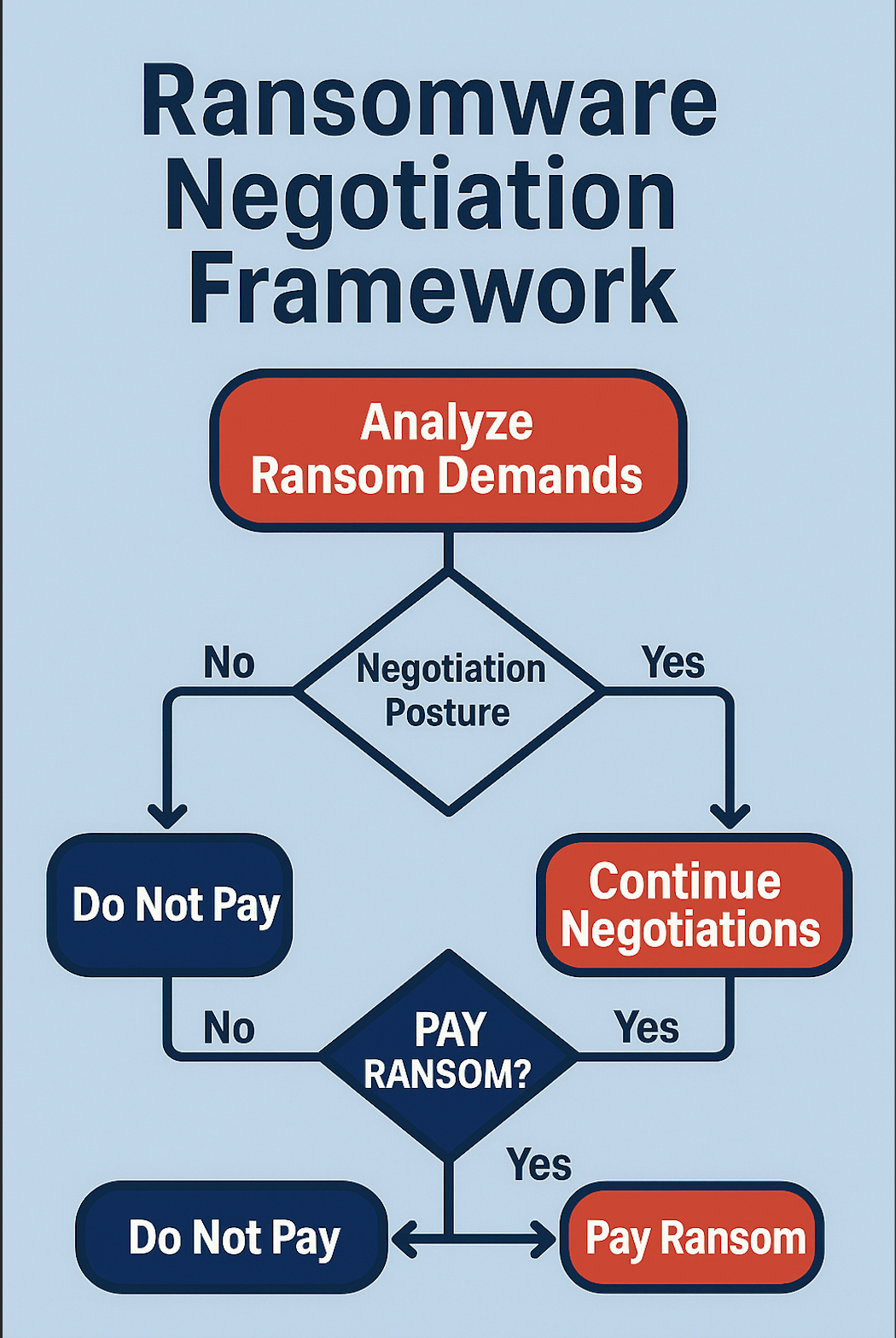
- Do we notify law enforcement?
- Do we inform customers or wait?
- Do we engage external negotiators?
- What is our payment position?
Post-Exercise Debrief
Capture what worked, what didn’t, and who had unclear responsibilities. Build a concrete action list.
How AiiR Changes the Game
The problem with legacy tabletop exercises is that they’re static snapshots—run once or twice a year, heavily dependent on facilitators, and rarely reflective of the evolving threat landscape.
AiiR transforms tabletop readiness into a continuous, AI-driven process.
- Dynamic Scenarios: Instead of pre-scripted injects, AiiR generates real-time, adaptive ransomware scenarios based on current threat intelligence, zero-days, and active extortion groups.
- Automated Role Assignments & Workflows: AiiR assigns roles, triggers notifications, and routes decisions across legal, PR, IT, and leadership—mirroring how a real incident would unfold.
- Decision Intelligence: Each choice your team makes is scored and mapped against regulatory, insurance, and OFAC constraints, providing immediate feedback.
- Eliminates Manual Prep: No more weeks of planning for a single tabletop. With AiiR, you can run “always-on” exercises at any cadence—weekly, monthly, or quarterly—with just a few clicks.
- Evidence for Compliance & Claims: AiiR documents every decision, response time, and gap—creating a defensible record for regulators, insurers, and boards.
The Numbers Don’t Lie: Why Automation Wins
Independent research shows the measurable benefits of automation in incident response:
- Organizations that applied automation cut annual incident costs by nearly 45%, reducing spend from $30.4M to $16.8M (Splunk, 2025).
- Automated workflows reduced time to resolution with a 50+% improvement in speed when minutes matter most.
- Automated alert triage significantly reduces Mean Time to Respond (MTTR) and decreases analyst fatigue, freeing teams for higher-value tasks (CloudGuard, 2025).
- Breach simulations and tabletop exercises enhanced by automation show faster response phases and more realistic inject handling, boosting effectiveness by up to 65% cost savings in breach management scenarios (Pulpstream, 2025).
- Across industries, automation drives up to 60% cost savings, 99.9% accuracy, and ROI payback in under a year. Beyond efficiency, automation reduces compliance risk by up to 90% and frees 20–40% of employee timefor higher-value work (McKinsey, Deloitte, UiPath).
Final Thoughts
The best time to test your ransomware response strategy is before a real attacker forces your hand. Tabletop exercises provide a controlled way to test, learn, and improve—but with AiiR, they no longer need to be static or siloed.
With AiiR’s AI-driven platform, organizations can continuously stress-test their readiness, align cross-functional teams, and generate actionable insights without the overhead of traditional tabletop planning.
Make them routine. Make them dynamic. And most importantly, make them powered by AiiR.